When choosing an LED light source for stage lighting, wattage does not equal brightness. Selecting the wrong source can cause optical failures, overheating, and wasted R&D budgets.
To choose the perfect LED engine, you must evaluate five key questions and match parameters directly to your fixture type.
1. The 5 Essential R&D Questions
Before looking at specifications, clarify these five foundational project criteria:
| Question | Engineering & Cost Impact |
| 1. Application? | Determines if the fixture is a Beam, Spot, Wash, Profile, or Hybrid. |
| 2. Optics? | Lens design sets strict physical limits on the LED chip size and parameters. |
| 3. Features? | Adding CMY, color wheels, or gobos extends the required focal length. |
| 4. Power Segment? | Sets the baseline for total brightness and thermal cooling requirements. |
| 5. Budget? | Material grades directly dictate performance limits and fixture reliability. |
2. Core Parameter Matrix
A professional LED source configuration is divided into three major engineering categories:
- Electrical: Voltage/current define the PSU. Multi-loop setups dictate the driver board. Wattage defines the cooling fans and heatsink. An NTC thermistor is mandatory to monitor real-time temperatures.
- Optical: Optical efficiency varies by fixture type (Beam: 40–45%, Profile/Hybrid: 50–60%). Theater fixtures require a high CRI (Ra > 95). The DUV value must be close to 0 for critical front lighting to prevent color shifts.
- Structural: Fixed mounting hole placement and source height directly limit the final physical size of the moving head.
3. Light Source Selection by Fixture Type
Different stage fixtures require completely different light source configurations. Here is how to map your fixture type to the ideal LED engine, using VSHOW's optimized product lineup as a benchmark:
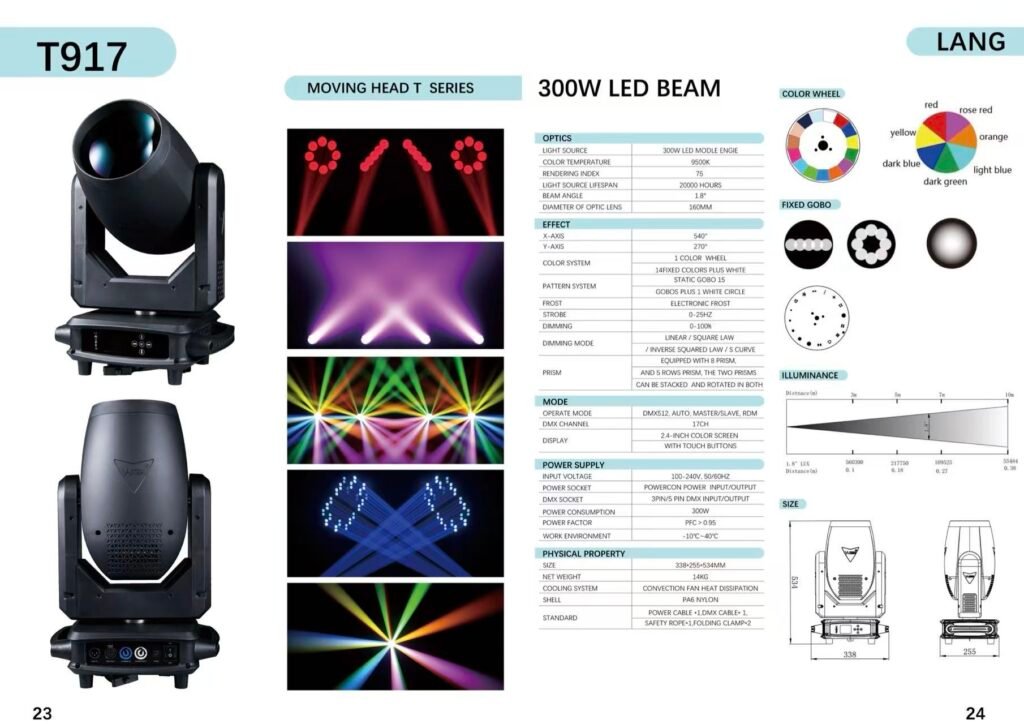
Beam Moving Heads: Small LEA & High Density
For sharp, piercing aerial beams, brightness depends on chip density, not high wattage.
- Parameters: Small Light-Emitting Area (5mm - 8mm) and a short focal length.
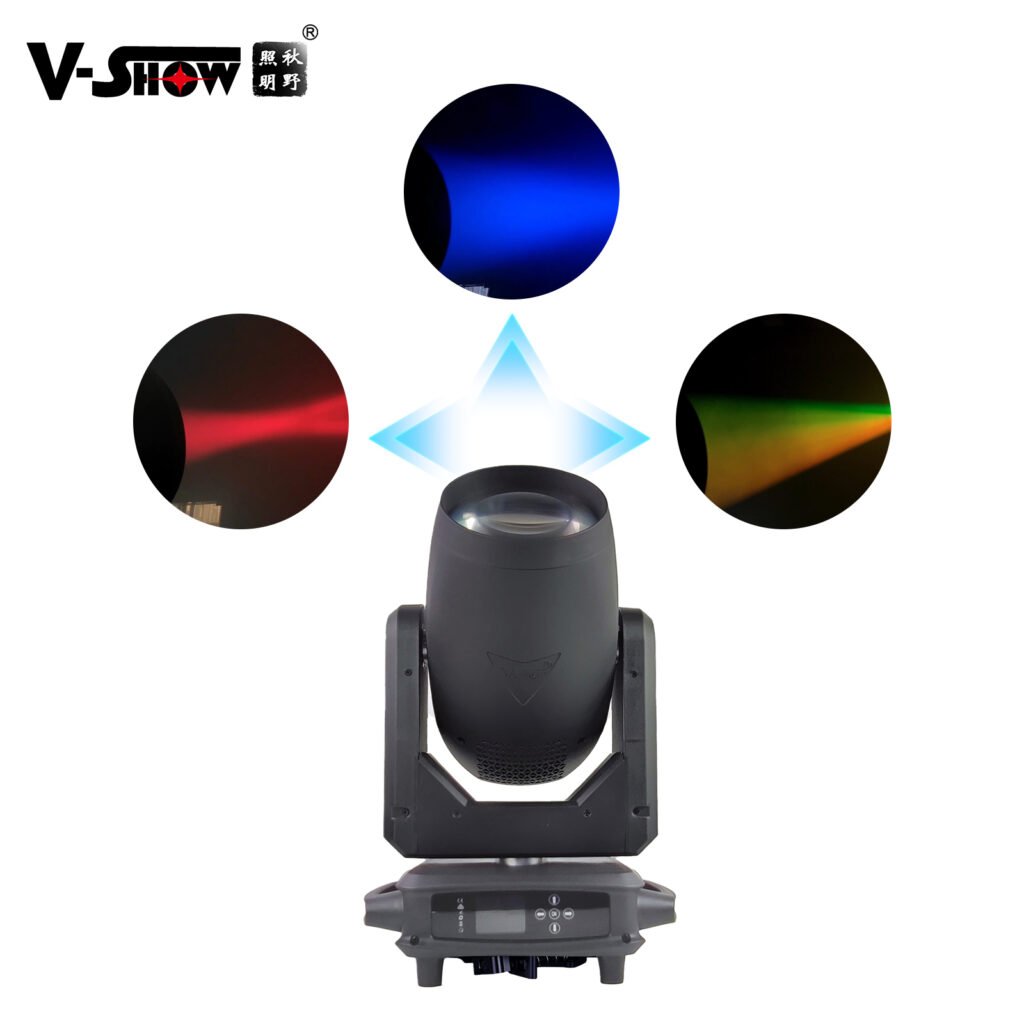
- VSHOW Example: The VSHOW T917 Lang uses a high-density 300W LED engine to deliver a razor-sharp beam without excessive power consumption.
3-in-1 Hybrid Fixtures: Versatile Balance
Hybrid fixtures (Beam/Spot/Wash) demand an all-around balanced optical profile.
- Parameters: Mid-sized Gobo allowance (8mm - 15mm) and a focal length of 30mm or higher to clear dual gobo wheels and prisms.
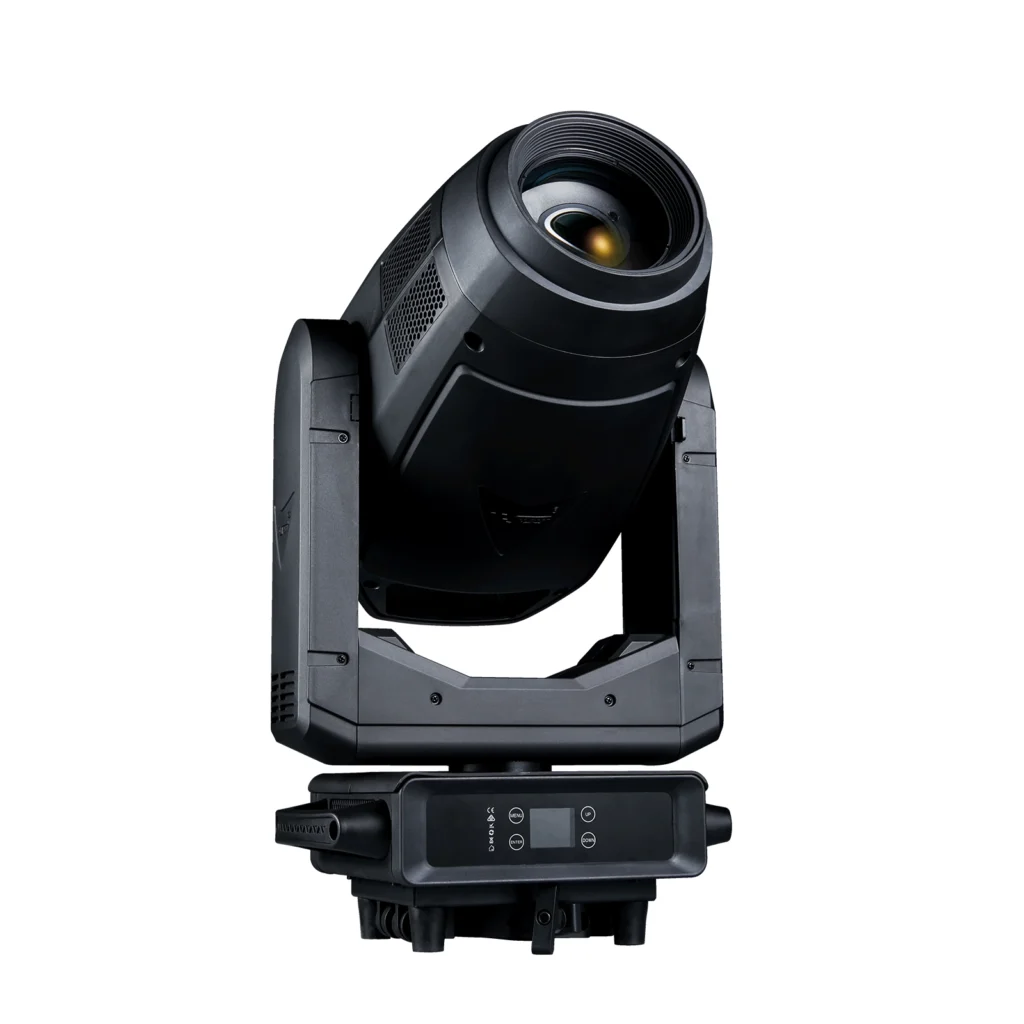
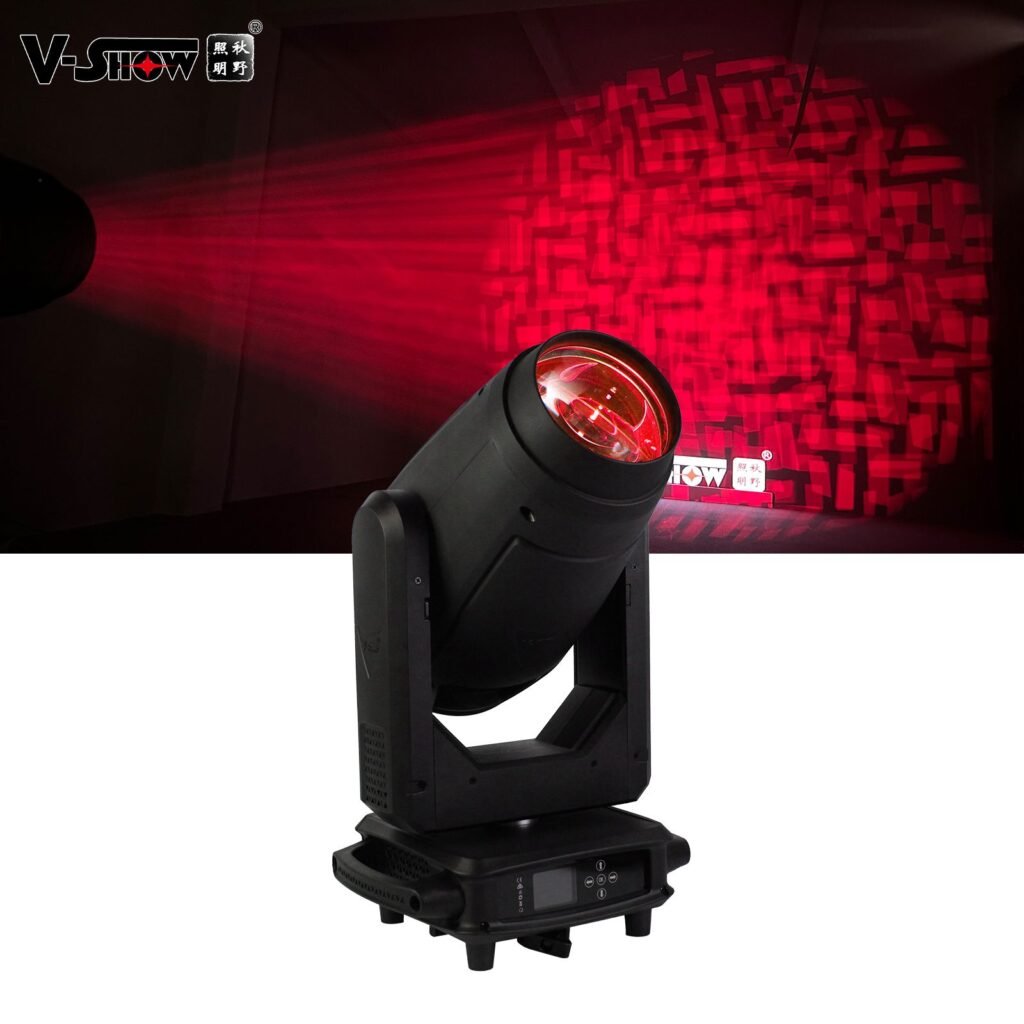
- VSHOW Example: The VSHOW S712 Kuan utilizes a balanced 450W LED module paired with a CMY + CTO system for multi-functional performance.
Profile Framing Lights: Long Focal Ranges & True Output
Profile fixtures house complex framing shutter blades and require strict output verification.
- Parameters: A long focal length of 60mm or more to ensure clean focusing on framing blades. Look at the integrated fixture luminous flux, not just raw source ratings, to avoid fake specs.
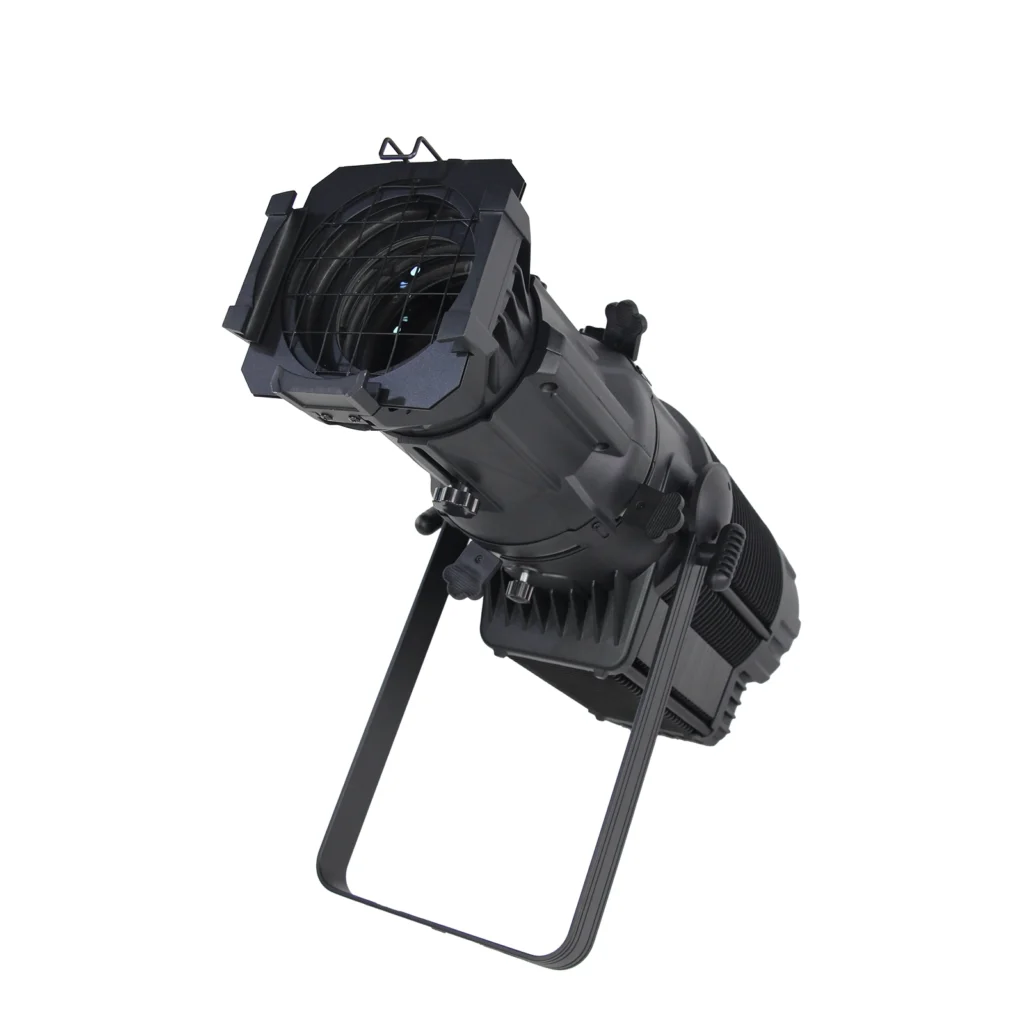
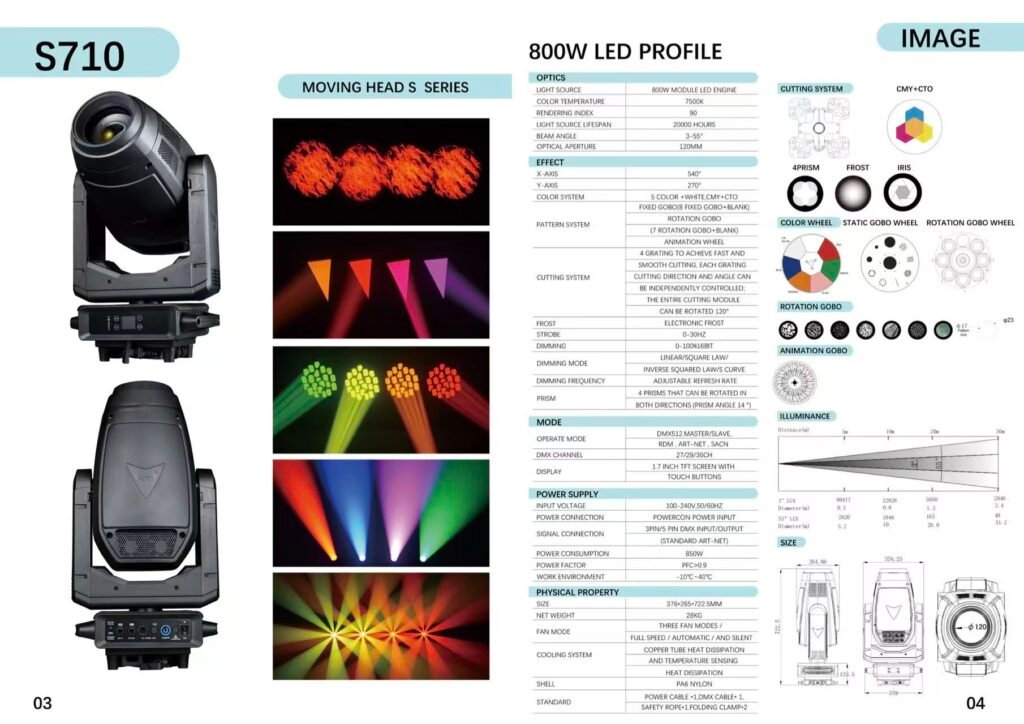
- VSHOW Example: The flagship VSHOW S710 Image Profile runs a premium 800W LED engine and a 120mm front lens, outputting high-end framing control with switchable CRI profiles (Ra ≥ 70 / 90).
Bottom Line
Stop chasing raw watts. Map out your optical constraints and verify real fixture efficiency first. Building fixtures with field-tested, pre-optimized LED solutions—like those from VSHOW—saves massive R&D costs and ensures bulletproof stability.
Which specific fixture type are you currently sourcing? Tell me your application scenario (e.g., theater, concert, or club) or your target wattage range!