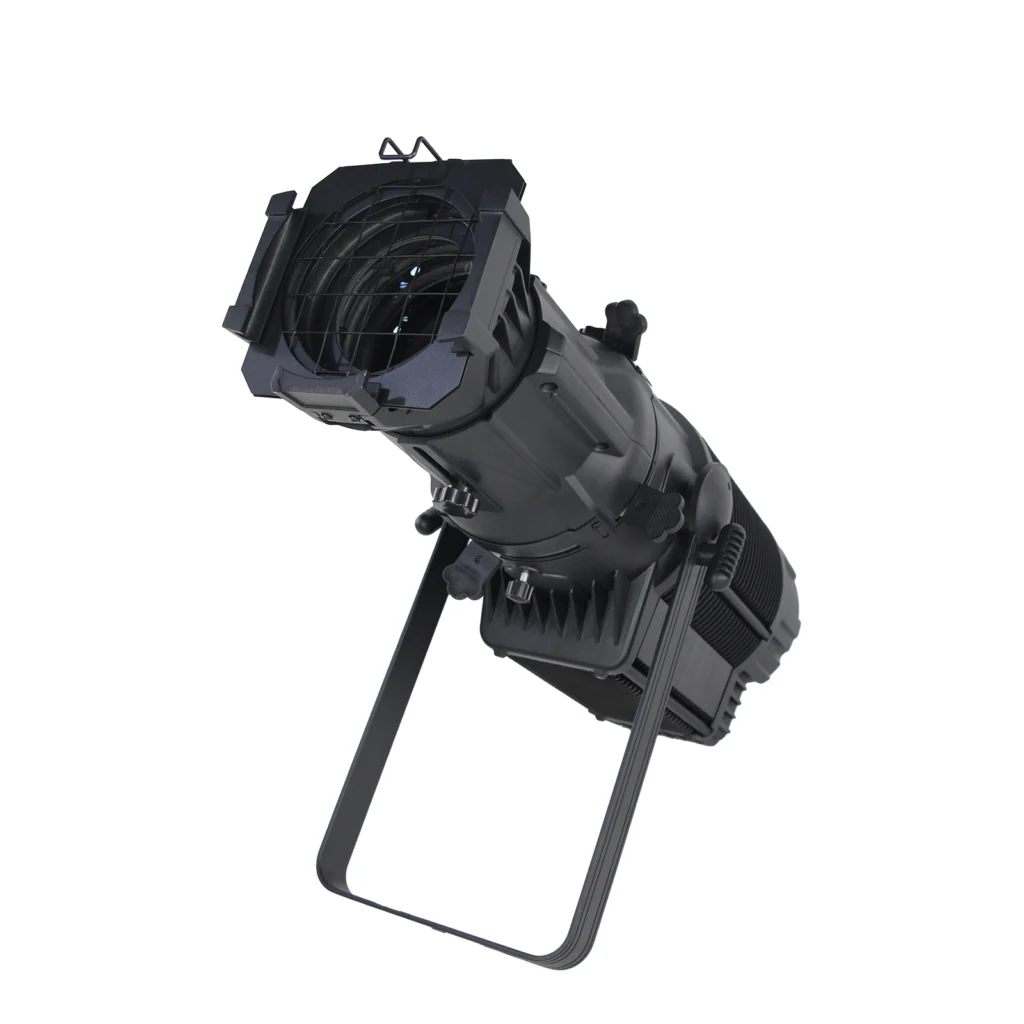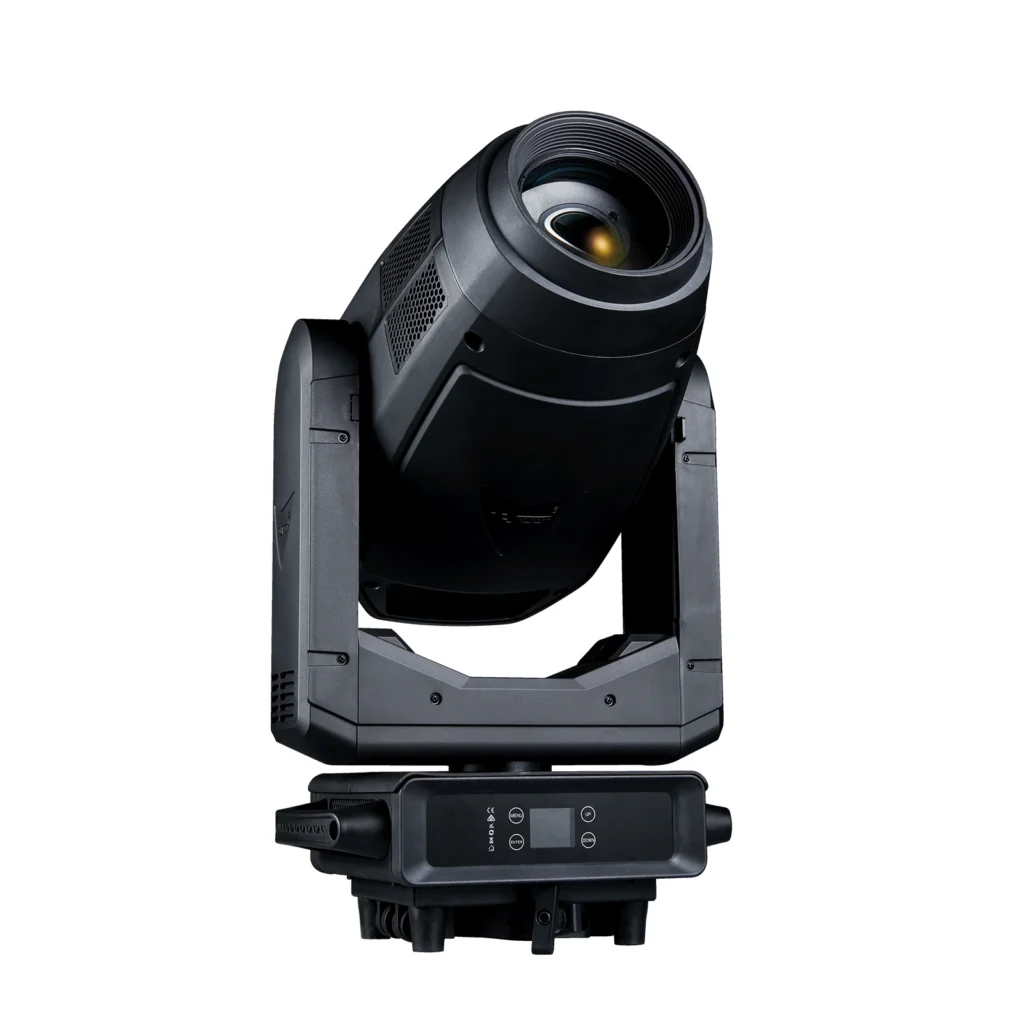
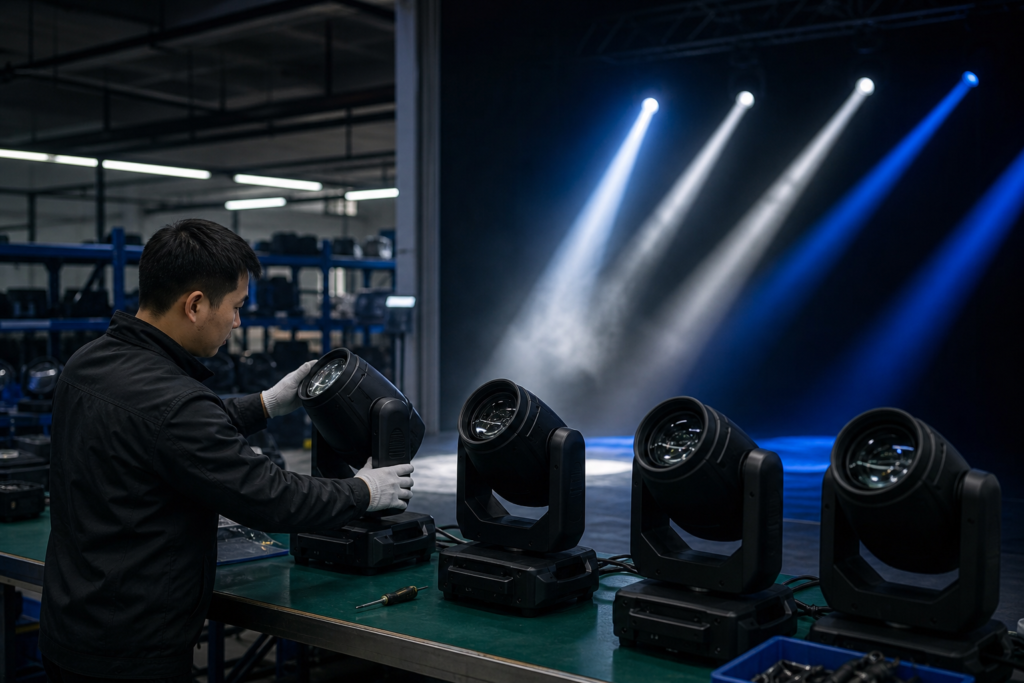
Buying professional lighting for a venue, rental fleet or touring production is rarely a simple catalogue decision. Two fixtures may look similar on paper, yet behave very differently after months of transport, heat and long show days. The right stage lighting manufacturer in China should offer more than a competitive price. Buyers need consistent optics, dependable mechanics, useful documentation and a support team that responds when a project is already on the road.
Start with the show environment
Before requesting a quotation, describe where the fixtures will work. A theatre may prioritize quiet fans, smooth dimming and accurate framing. A concert rental company may care more about output, fast pan and tilt, rugged housings and easy servicing. Outdoor events add weather protection and temperature management to the list. Sharing the trim height, throw distance, control system and expected duty cycle gives a supplier enough context to recommend suitable equipment instead of simply pushing the most powerful model.
For dynamic beams, gobos and aerial effects, compare the available moving head light range. Ask for photometric data at practical distances, not only a maximum lumen figure. Beam uniformity, focus quality and color consistency often matter more to an audience than a headline specification.
Look beyond the LED wattage
A trustworthy moving head light manufacturer should explain the complete optical system: light source, lens design, coating, color mixing and thermal path. Higher wattage does not automatically produce a cleaner or more useful beam. Request beam-angle measurements, color temperature information and videos recorded without heavy editing. If several fixtures will be used together, ask how color and brightness are matched between production batches.
The mechanical system deserves equal attention. Pan and tilt should stop accurately after rapid movements, while belts, motors and bearings must tolerate vibration and repeated transport. Check whether common service parts are stocked and whether modules can be replaced without dismantling the entire fixture. That difference can save hours during a tour.
Verify effects and control in real conditions
When evaluating an LED moving head light manufacturer, send a short test cue list. Include slow dimmer fades, rapid movement, saturated colors, gobo changes and long full-output runs. Confirm the DMX channel chart before the order and test RDM or network functions if your system uses them. For high-energy accents, review the dedicated LED strobe light collection and compare refresh behavior on camera as well as brightness to the eye.
Ask what happens before shipment
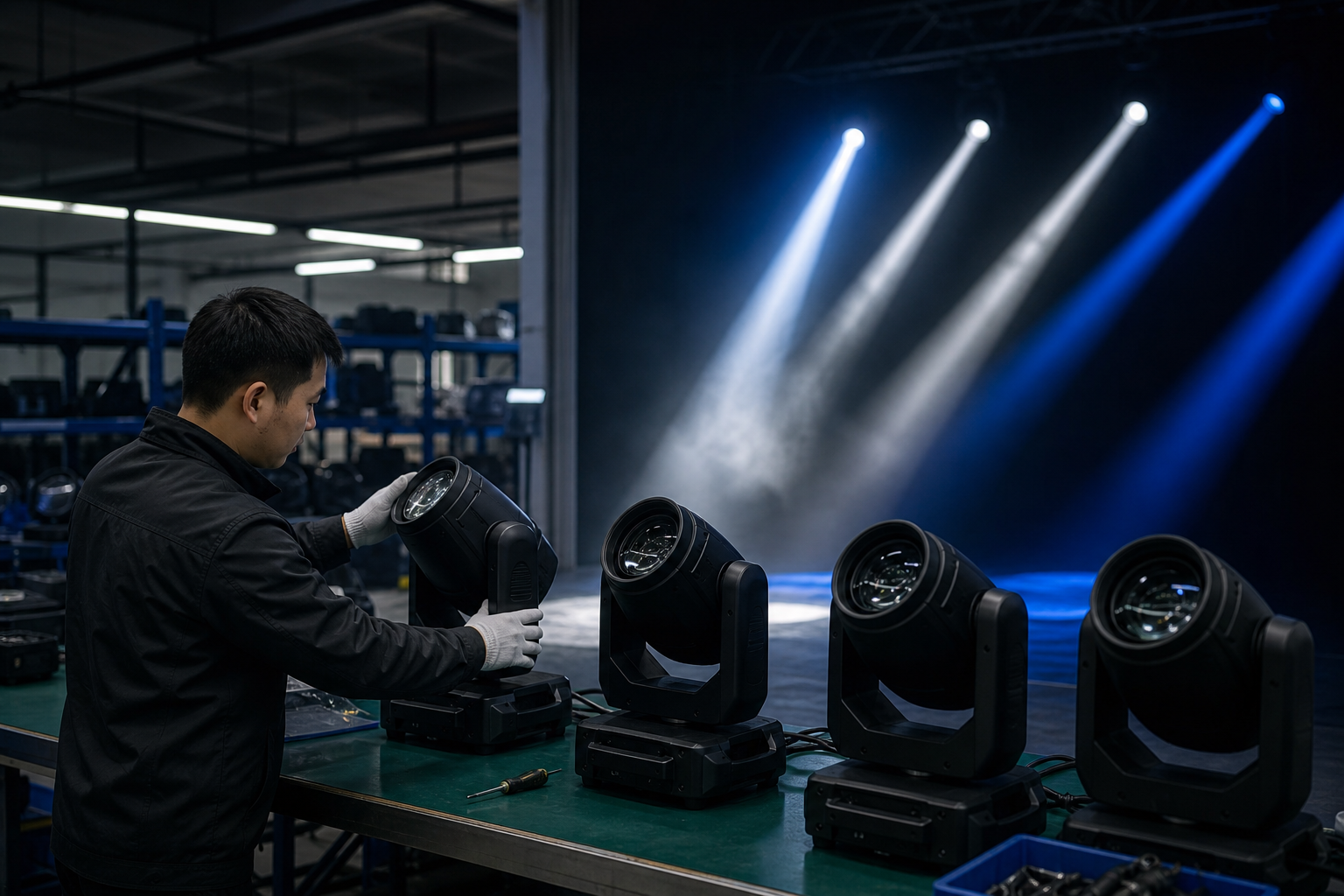
A capable stage strobe light manufacturer or moving light factory should have a repeatable inspection process. Useful checks include incoming component verification, aging tests, temperature monitoring, movement calibration, waterproof testing where applicable and final DMX inspection. Ask for the checklist used for your order and request serial-number records. Documentation should include manuals, channel charts, packing lists and clear identification for spare parts.
Packaging is also part of product reliability. Discuss carton strength, foam density, flight-case options and spare accessories before production. A well-built fixture that arrives with a bent bracket is still a failed delivery.
Choose a supplier for the years after delivery
The strongest supplier relationship becomes visible after the invoice is paid. Ask who handles technical questions, how warranty cases are documented and how quickly replacement parts can be dispatched. Review the manufacturer’s company and production experience, then discuss your application through the project consultation team. A good partner will ask detailed questions, flag unrealistic expectations and help you build a practical spare-parts plan.
For distributors and production companies, qualification is not about finding the cheapest fixture. It is about reducing surprises across every rehearsal, shipment and performance. Test samples under real conditions, keep specifications in writing and choose a manufacturer whose engineering and service teams are as dependable as the light itself.