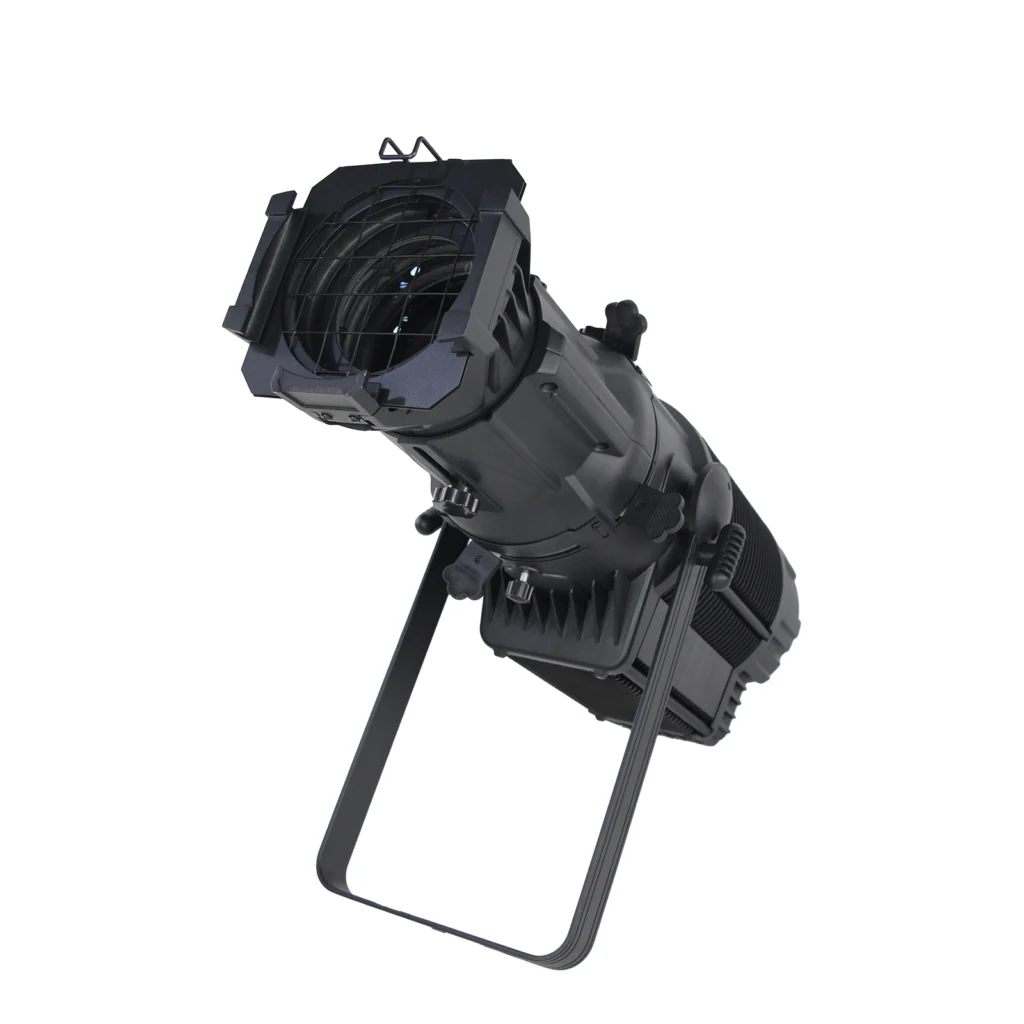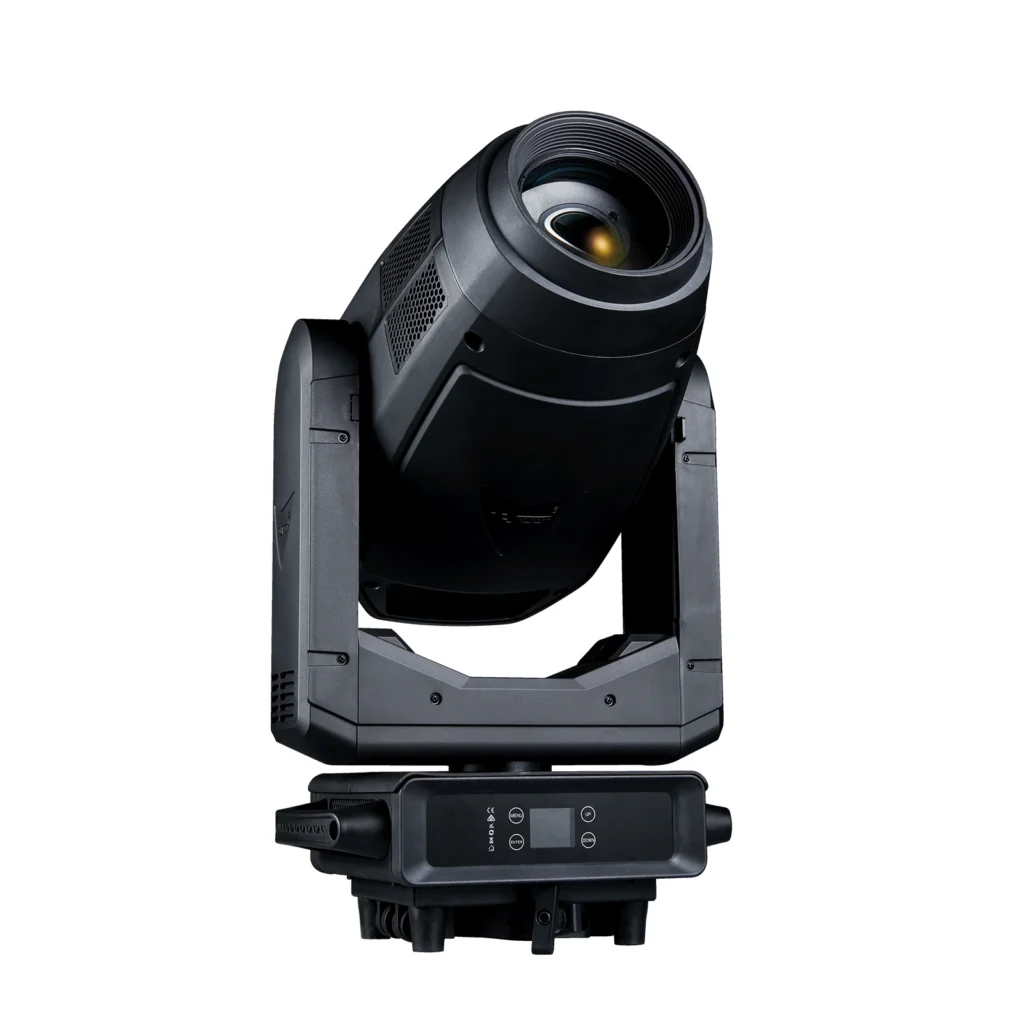
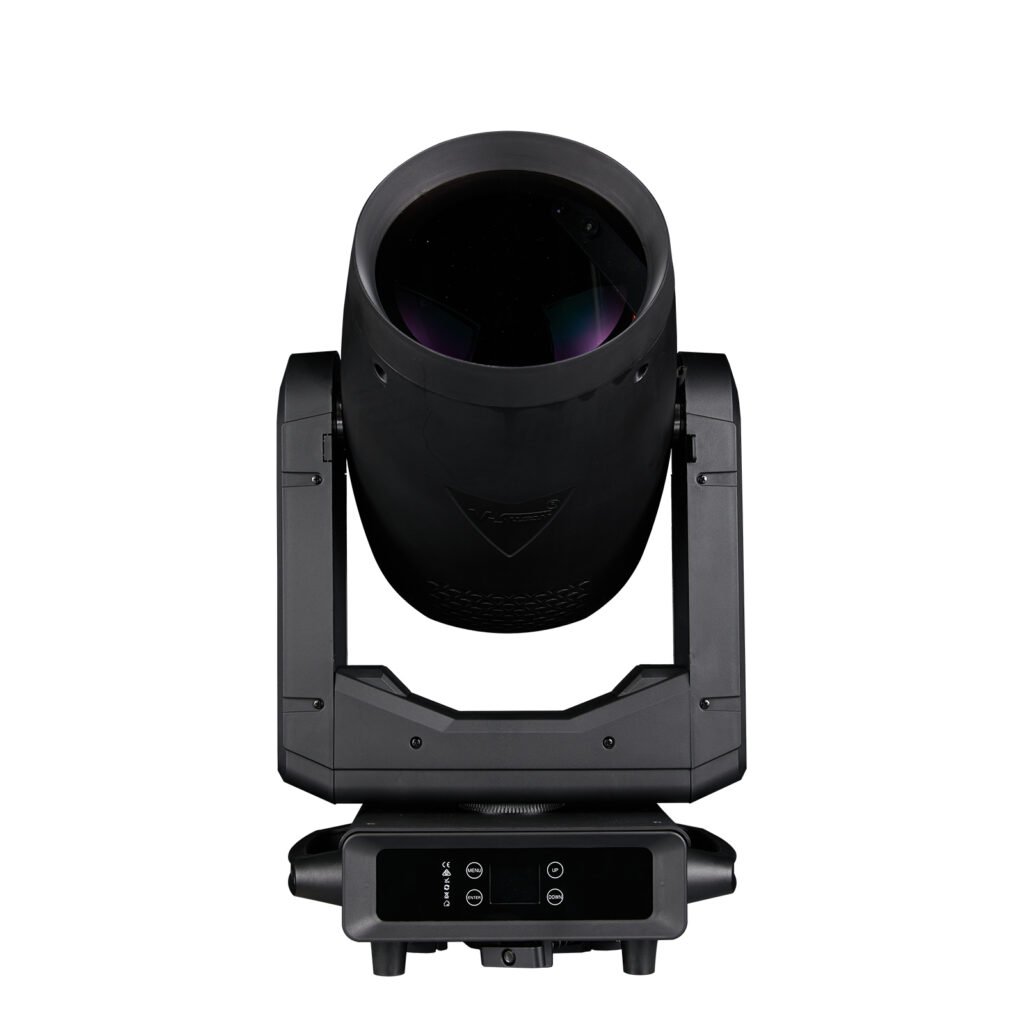
A moving head light manufacturer can provide impressive lumen claims, long feature lists, and dramatic demo videos. Yet touring companies, rental houses, and venues need fixtures that remain predictable after transport, dust exposure, firmware updates, and hundreds of operating hours. A meaningful evaluation therefore combines optical performance, mechanical behavior, control, thermal design, and serviceability.
Start with the light engine and optics. Rated wattage does not reveal how much usable light reaches the stage. Measure output at practical throw distances and beam angles, then examine edge uniformity, color consistency, focus, zoom, and field artifacts. For profile fixtures, test shutters at several focus positions. For beam and hybrid units, assess whether gobos, prisms, and frost remain clean across the working range.
Movement quality is obvious in slow cues. Pan and tilt should start smoothly, stop accurately, and return to position after repeated cycles. Listen for gear noise and fan changes in a quiet venue. Check how the fixture behaves near movement limits and after a power interruption. A fast head is not necessarily a refined head; precision and repeatability often matter more than maximum speed.
Control implementation deserves a console test. Review DMX channel modes, 16-bit movement, dimming curves, color calibration, reset behavior, and RDM support where required. Channel documentation should be unambiguous. Run the fixture beside other units at low dimmer levels, where stepping and inconsistent color mixing are easiest to see. Firmware updates should have a clear procedure and a recovery path if communication fails.
For outdoor or demanding events, the enclosure must match the claim. An IP rating depends on gasket design, cable entries, vents, fasteners, and assembly control—not merely a sealed-looking housing. Inspect condensation management, connector covers, drainage orientation, and corrosion protection. Thermal testing should include the expected ambient temperature and full-output duration, because automatic derating can change a show after the fixture heats up.
Serviceability affects ownership cost. Ask how quickly fans, power supplies, LED modules, belts, sensors, and display assemblies can be replaced. Exploded diagrams, spare-part availability, diagnostic codes, and responsive technical support reduce rental downtime. Flight-case design also matters: repeated vibration and improperly supported yokes can damage a good fixture before it reaches the stage.
A professional stage lighting supplier should support a sample test that resembles actual use. Build cues, run the unit for hours, power-cycle it, move it in its case, and repeat measurements. This process exposes the difference between a fixture that photographs well and one that earns its place in a working lighting inventory.