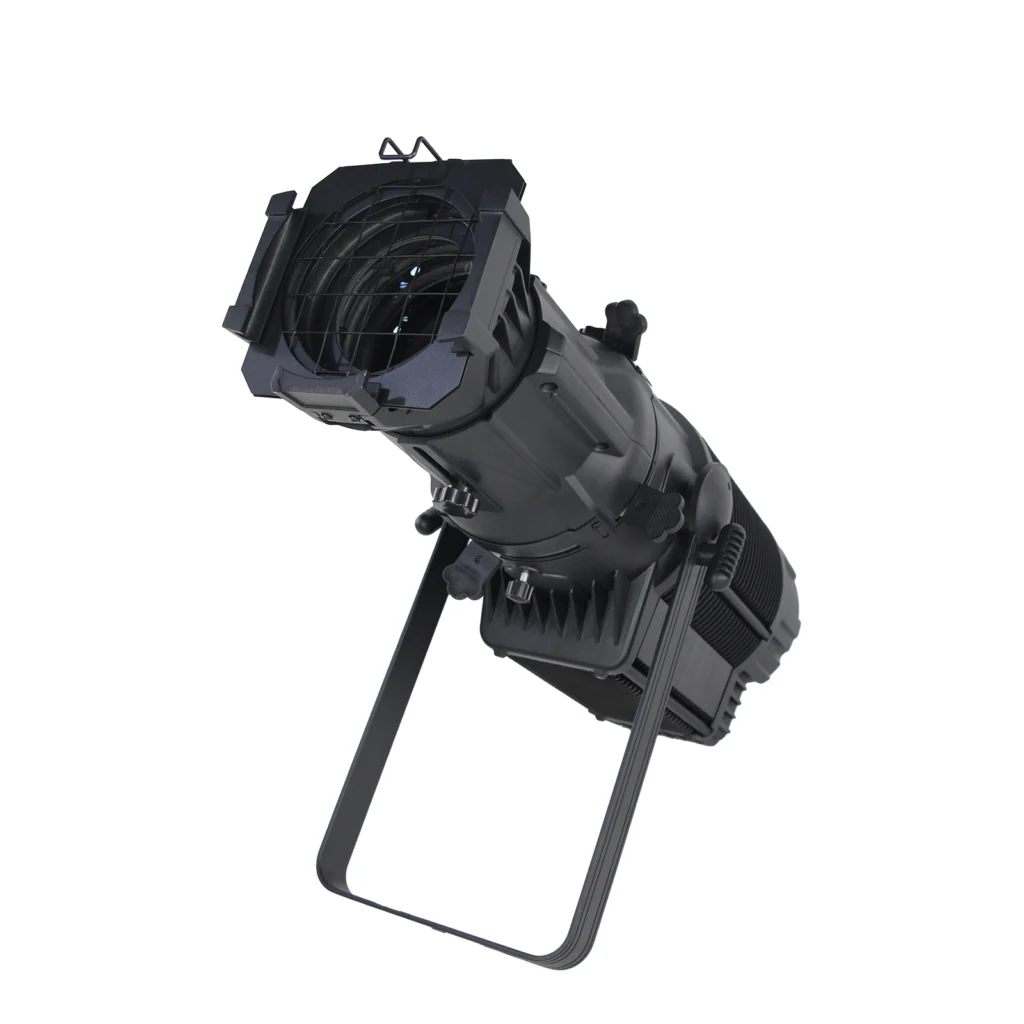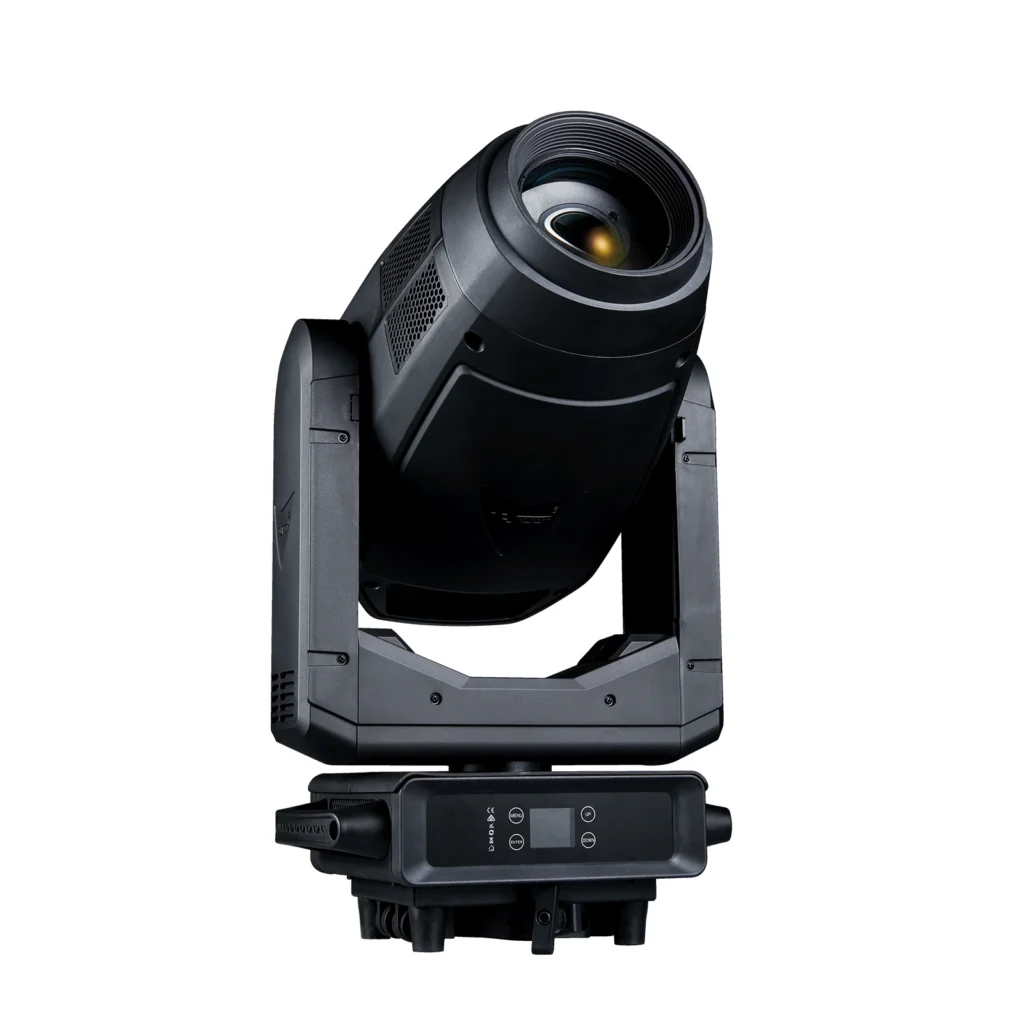
Moving head lights represent a sophisticated integration of optics, mechanics, and electronics. Since light generation inherently produces heat, engineers must address how materials perform under high-temperature conditions during the design phase.
1. Light Source
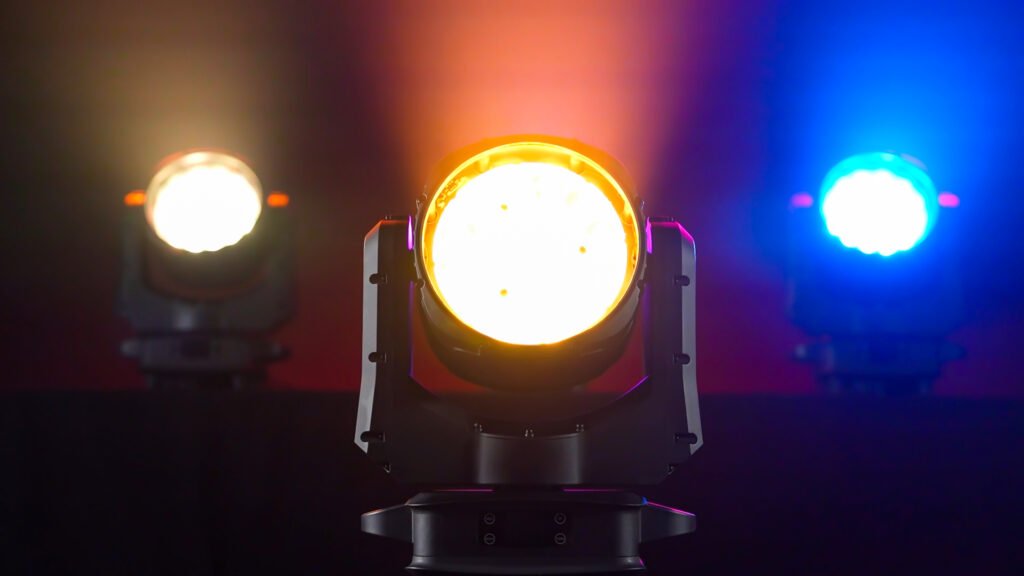
Lamp manufacturers specify a maximum temperature rating for bulbs, referring to the threshold for the internal molybdenum foil. Early 1200W short-arc imported lamps had a limit of 350°C, while modern versions have increased this tolerance to 450°C or even 500°C. Ignoring these limits can be costly: overheating causes the molybdenum foil to burn and blacken at the electrode junction, leading to glass cracking and gas leakage. Conversely, if the bulb is too cold, it risks premature explosion. Both extremes shorten lamp life.
Most fixtures utilize air cooling, but airflow volume is less important than direction. Cooling should target the pins, while the envelope itself requires only minimal airflow. Excessive direct cooling of the envelope prevents full ionization of metal halide elements during startup, causing the bulb to operate abnormally, blacken internally, and fail to reach full brightness. Envelope temperature can be calculated by measuring the pressure differential between the installed lamp and a bare bulb.
2. Optical Materials
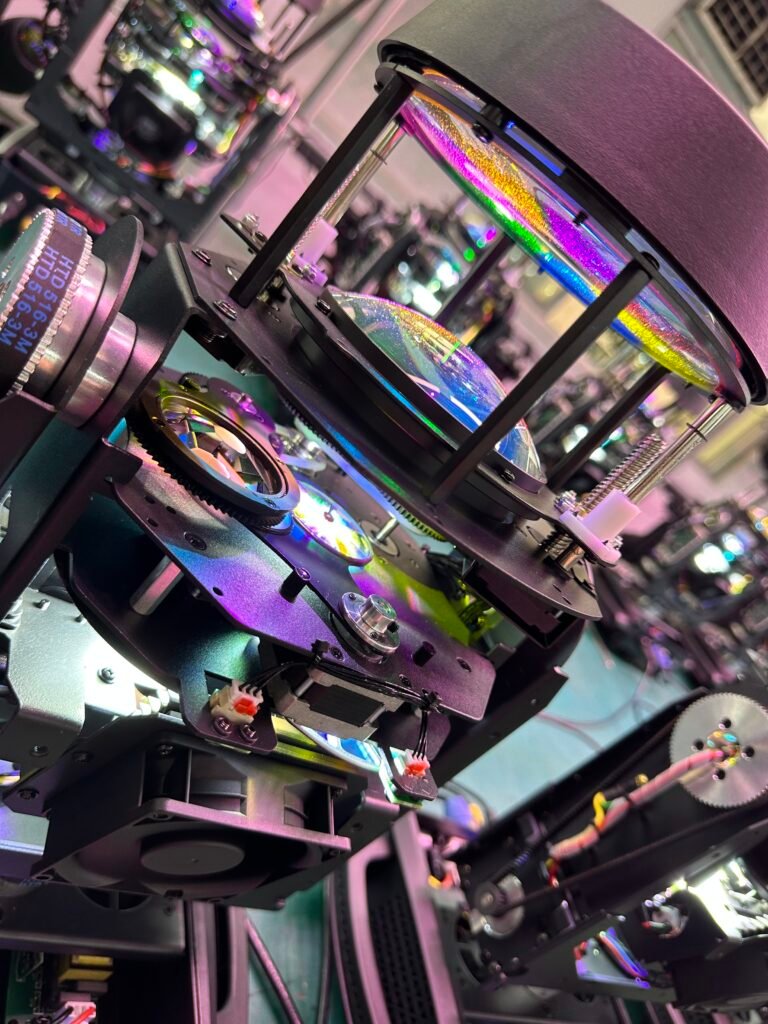
High temperatures can cause reflector bowls, lenses, color filters, and gobos to crack, delaminate (anti-reflective coating failure), or suffer color shift. Material selection must prioritize thermal resistance, processing techniques (cutting, coating), and heat dissipation. Design and installation must also account for the coefficient of thermal expansion; glass is most prone to cracking under uneven heating or thermal shock, necessitating rigorous testing.
Cooling Methods:
- Blocking: Heat-cut filters (IR filters) are coated to allow only visible light (380–780 nm) to pass while blocking infrared radiation (>780 nm).
- Filtering: Cold-light reflectors utilize special coatings to reflect visible light while transmitting infrared heat.
- Air Cooling: Using fans to create airflow for heat exchange.
- Installation: Mounting hardware must accommodate thermal expansion—tight enough to prevent loosening, but loose enough to avoid stressing the glass into cracking.
3. Metal Components
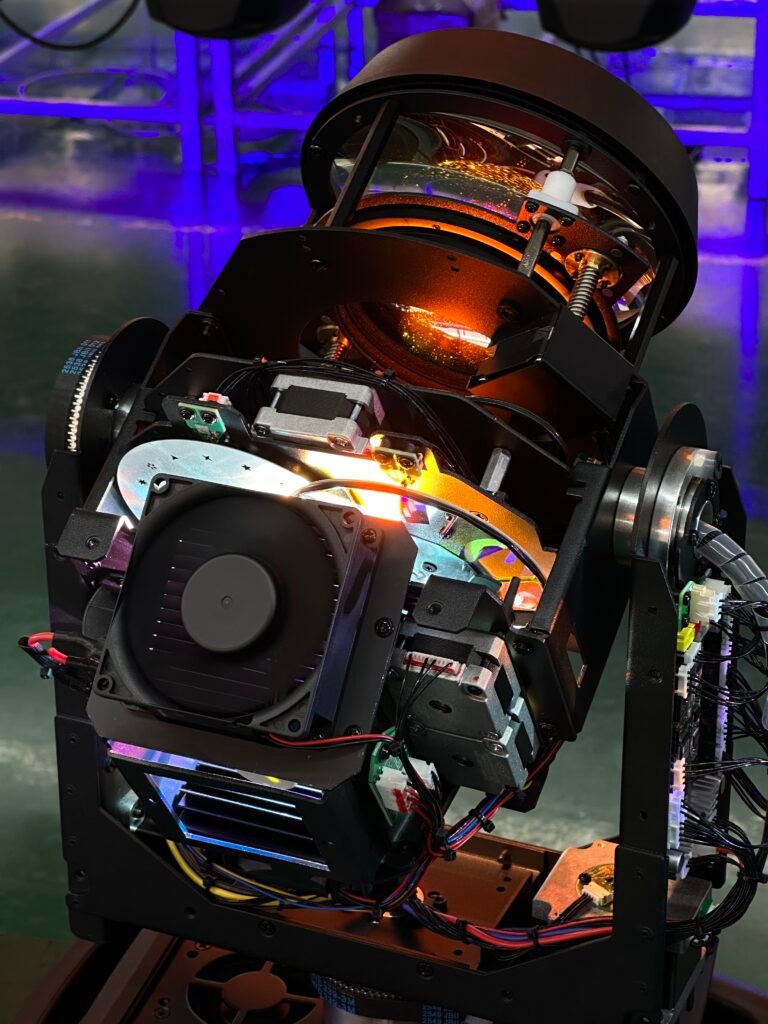
Aluminum is typically used for high-temperature components such as gobo wheels, color wheels, shutter blades, and motor brackets.
- Material Properties: Special attention is required for moving parts (bearings, gears) at high temperatures to prevent expansion, rust, oxidation, or breakage.
- Processing: Metal gobos often feature one side painted black to meet optical requirements. For glass gobos, the black-coated side must face away from the light source to prevent delamination and cracking.
- Heat Dissipation: Air cooling via ducts or directional airflow is effective. When using aluminum heat sinks, vertical orientation improves efficiency by 15% compared to horizontal placement; black oxide surface treatment offers another 15% improvement. If relying solely on passive cooling, thermal paste must be applied to reduce contact resistance.
4. Electronic and Electrical Components
Electronics are highly temperature-sensitive; exceeding limits causes instability or total system failure.
Cooling: Ballasts, power supplies, motors, and capacitors can use finned aluminum heat sinks or forced air cooling.
Critical Components: CPUs, power transistors, and driver ICs have strict operating ranges. PCBs should be mounted away from high-heat zones and direct light exposure.
Environmental Factors: Air cooling design must consider dust, smoke, and humidity, which can cause corrosion and insulation failure; therefore, filtration systems are essential.
5. Wiring and Drive Belts
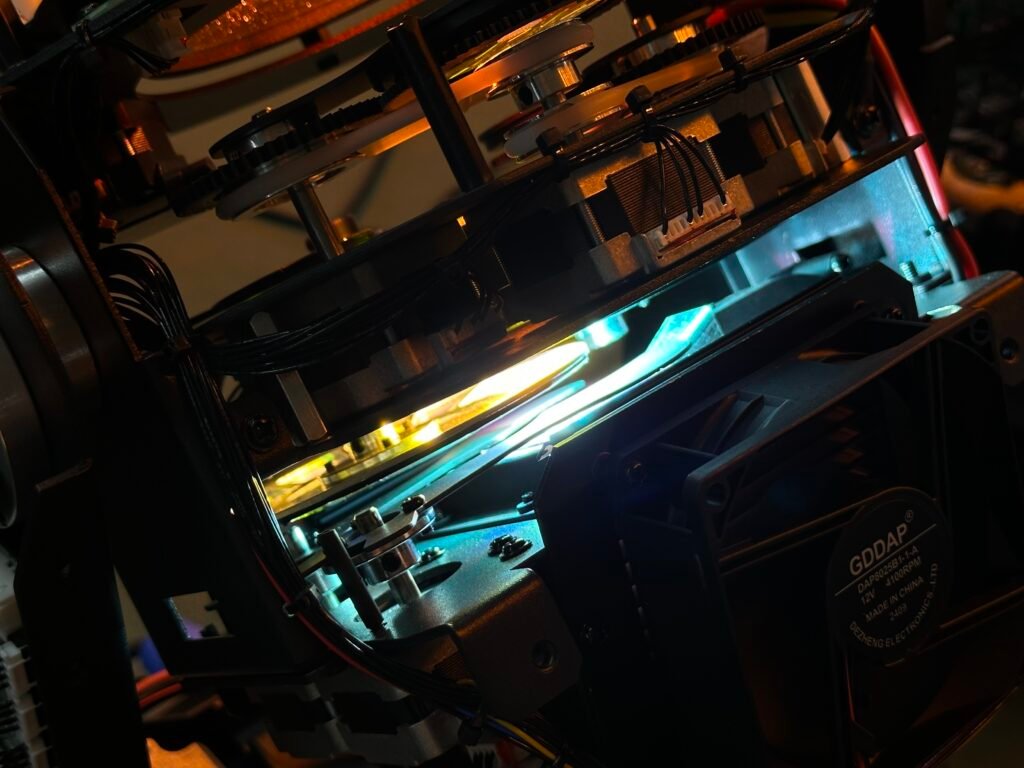
Wiring: Cables in high-temperature zones require Teflon or high-temp silicone jackets, or must be fitted with protective sleeves to resist radiant heat.
Belts: Standard belts harden and crack under prolonged heat. High-temp rated materials must be selected, and designs should shield belts from direct light.
6. Plastic Components
Plastics used in fixtures must be evaluated for flame retardancy, UV resistance, and high-temperature stability.
7. Thermal Protection Systems
The goal is to ensure normal operation within the set environmental temperature and cut off the heat source in case of overheating.
Safety Threshold: Normal operating ambient temperature is capped at 40°C, with stress testing conducted at ≥45°C.
Testing: Thermal switches are installed on power supplies, ballasts, and in high-temp zones. Testing must cover all mounting angles and pan/tilt orientations to verify the switch activation temperature and the effectiveness of the protection logic.