
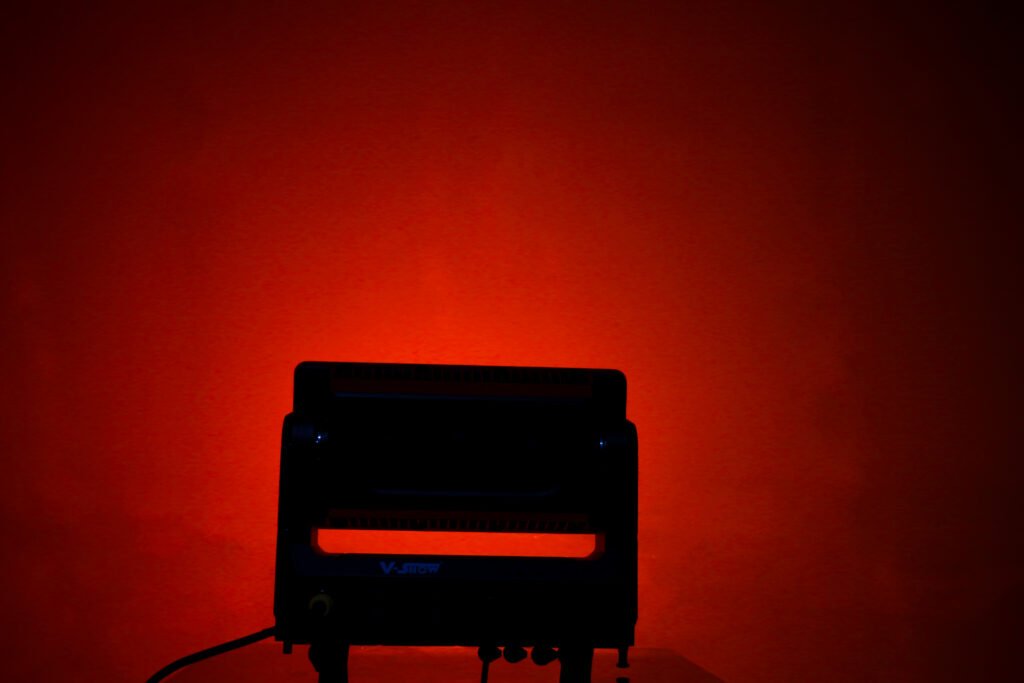
The Rental Value of a Moving Head Has Changed
A professional moving head used to be judged mainly by output, beam quality and the number of effects packed into its optical system. Those specifications still matter, but rental companies now have another question: how many different jobs can this fixture complete without creating extra logistical problems? The answer increasingly determines whether a light becomes a useful fleet asset or a product that spends too much time sitting in a warehouse.
That distinction matters when sourcing from a stage lighting manufacturer China can supply to multiple export markets. Concerts are moving between indoor arenas and outdoor festival sites, corporate productions want camera-friendly color and quiet operation, while rental companies need equipment that can survive repeated transport. A specification therefore has commercial value only when it reduces operational limitations.
The scale of Prolight + Sound Guangzhou 2026 illustrates the competitive environment behind that change. The exhibition hosted 2,227 exhibitors and more than 111,000 professional visitors, while manufacturers showed increasingly integrated lighting, AV and digital entertainment systems. Buyers comparing suppliers are consequently seeing far more than brighter versions of conventional fixtures.
IP Ratings Are Becoming a Fleet Decision
That pressure to make one fixture useful on more jobs explains why weather resistance has moved closer to the center of moving-head procurement. An IP-rated fixture can be deployed indoors even when weather protection is unnecessary, but an indoor-only unit immediately restricts the jobs for which a rental company can quote it.
The pattern is visible in current professional fleets. Claypaky reported in July 2026 that Berlin-based Cue Group added IP66 Arolla Aqua S-LT and M-LT fixtures for work ranging from conferences to outdoor festivals. CHAUVET Professional, meanwhile, continues to build IP65 protection into moving heads and motorized effect fixtures. Weather resistance is therefore becoming less of a specialty specification and more of a way to improve utilization.
A moving head light manufacturer should still be evaluated on how that protection is implemented rather than on the IP number alone. Waterproof connectors, cooling design, service access and housing construction affect whether a fixture remains practical after months of touring. Buyers should also ask whether maintenance procedures preserve the intended environmental protection after the enclosure has been opened.
Multifunction Fixtures Reduce More Than Fixture Count
Once a fleet can move between indoor and outdoor work, the next efficiency gain comes from combining functions that previously required separate products. Beam, wash, framing, pixel effects and strobe capability are increasingly appearing in overlapping fixture categories, giving designers more options while simplifying the inventory a rental business needs to own.
VSHOW's product range provides a useful example. Its S711 combines a 600W LED engine with CMY color mixing, variable CTO, framing shutters, gobos, prism effects and motorized optical controls. At the effects end of the range, the IP65 V12 combines moving-head operation with separately controlled RGB and cool-white pixel zones and a 1–25 Hz strobe function. A moving head stage light supplier offering this kind of range can cover substantially different show requirements without forcing buyers into completely isolated control and maintenance ecosystems.
This does not mean every multifunction fixture is automatically more economical. If combining functions makes a unit excessively heavy, difficult to repair or unnecessarily expensive, utilization can fall rather than rise. The useful question is whether each additional feature replaces another piece of equipment often enough to justify its cost.
Control Architecture Now Affects Purchasing
That same fleet logic extends from optics into control. Once fixtures contain individually controlled pixels and multiple effect engines, the number of parameters increases quickly. A large rig cannot depend only on impressive hardware; technicians also need efficient addressing, monitoring and data distribution.
The VSHOW V12, for example, supports DMX512, RDM, Art-Net and sACN and offers channel modes ranging from 8 to 97 channels. Those options matter because a small event may prioritize simple programming, while a large production may want access to individual zones and network-based control. An LED fixture manufacturer producing moving heads for professional rental therefore has to consider both what a fixture can create and how efficiently crews can manage it.
When evaluating a moving head light manufacturer, buyers can reduce surprises by checking a small number of operational points before committing a whole fleet:
- Confirm whether IP protection applies to normal real-world cabling and operation, not just the sealed housing.
- Compare weight, power consumption and flight-case density alongside optical output.
- Check DMX modes, RDM behavior and support for Art-Net or sACN where network control is required.
- Evaluate access to service parts, manuals, firmware and technical support before calculating long-term ownership cost.
The Best Specification Is the One That Gets Used
Those checks lead back to the main purchasing issue: rental equipment earns money when it can be specified repeatedly. A spectacular fixture that fits only a narrow production style may generate less return than a slightly less exotic unit that works on festivals, corporate shows, theaters and touring productions.
For buyers comparing a stage lighting manufacturer China based sourcing can offer, this is also why factory capability matters beyond the price on a quotation. OEM or ODM support, documentation, replacement parts, consistent firmware and dependable delivery all affect the number of years a fleet can remain commercially useful. VSHOW says it combines manufacturing and R&D with overseas warehousing in China, Europe and the Americas, which is the kind of supply-chain capability professional purchasers should investigate when comparing vendors.
The same principle applies when choosing a moving head stage light supplier for a new fleet. Buyers are no longer simply purchasing brightness. They are purchasing deployability: the ability to move one fixture through different environments, control systems and show formats without adding unnecessary equipment or technical risk.
That is why the strongest professional moving heads are becoming weather-resistant, network-aware and multifunctional at the same time. For rental companies, those features are not independent trends. Together, they determine how often a fixture can leave the warehouse and start earning revenue.